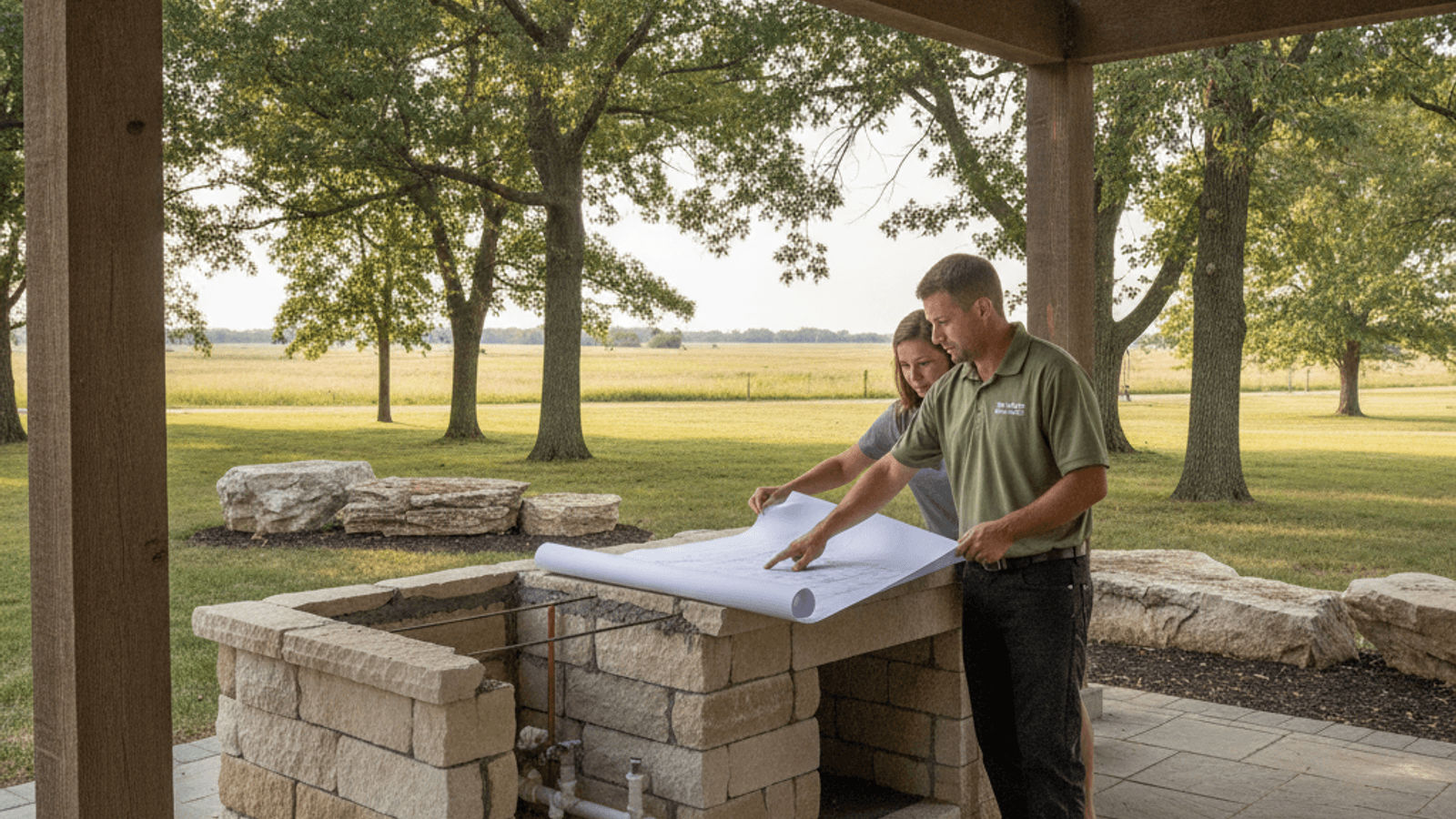
An outdoor kitchen is one of the higher-ticket outdoor living projects, and the ones that hold up well here are planned around Kansas winters from the very first sketch, not treated as a warm-weather-only feature that happens to sit outside year-round.
Utilities: the part that’s easy to underbudget
An outdoor kitchen typically needs some combination of gas, water, and electrical run to the site. Gas lines need to be sized correctly and installed to code for whatever appliances you’re planning, grill, side burner, or a pizza oven. Water lines need a proper shutoff and drain-down plan built in from the start, since a line left full of water through a Kansas freeze will crack. Electrical needs to account for refrigeration, lighting, and any additional appliances.
This utility planning is where a lot of the real cost lives, and it’s also where cutting corners causes the most expensive problems down the road, a burst water line inside a masonry structure isn’t a simple fix.
Covered or open
A covered structure, whether a full roof extension, pergola, or pavilion, protects both the appliances and the finish materials from hail, heavy rain, and sun exposure that otherwise shortens their working life. It’s not strictly required, but most of the outdoor kitchens built well here include some form of cover, and it’s worth budgeting for even if it’s added in a later phase.
Cabinetry and countertop materials
Materials matter more outside than they would in an interior kitchen, since they’re exposed to freeze-thaw cycling, UV, and moisture year-round. Masonry or purpose-built outdoor cabinetry holds up better than materials adapted from interior use. Countertops in particular need to be freeze-tolerant; some natural stones and engineered materials handle Kansas winters better than others, which is worth discussing directly rather than assuming any countertop material sold for kitchens will work equally well outdoors.
What to budget for realistically
A simple built-in grill island with basic counter space starts in the lower end of the range, while a full outdoor kitchen with refrigeration, multiple appliances, and a covered structure runs considerably more, often reaching well into five figures. The utility work, structure, and finish materials all move that number, and it’s worth getting a couple of local estimates once you know roughly what you want included rather than trying to budget from a national average that doesn’t account for Kansas-specific utility and freeze-proofing needs.
Pairing it with a fire feature
A lot of outdoor kitchen projects get planned alongside a fire pit or outdoor fireplace, since the two create a natural cooking-and-gathering flow in the same part of the yard. If that’s part of your plan, it’s worth designing both together from the start rather than adding the fire feature as an afterthought, since clearance and utility runs are easier to plan once than to retrofit.