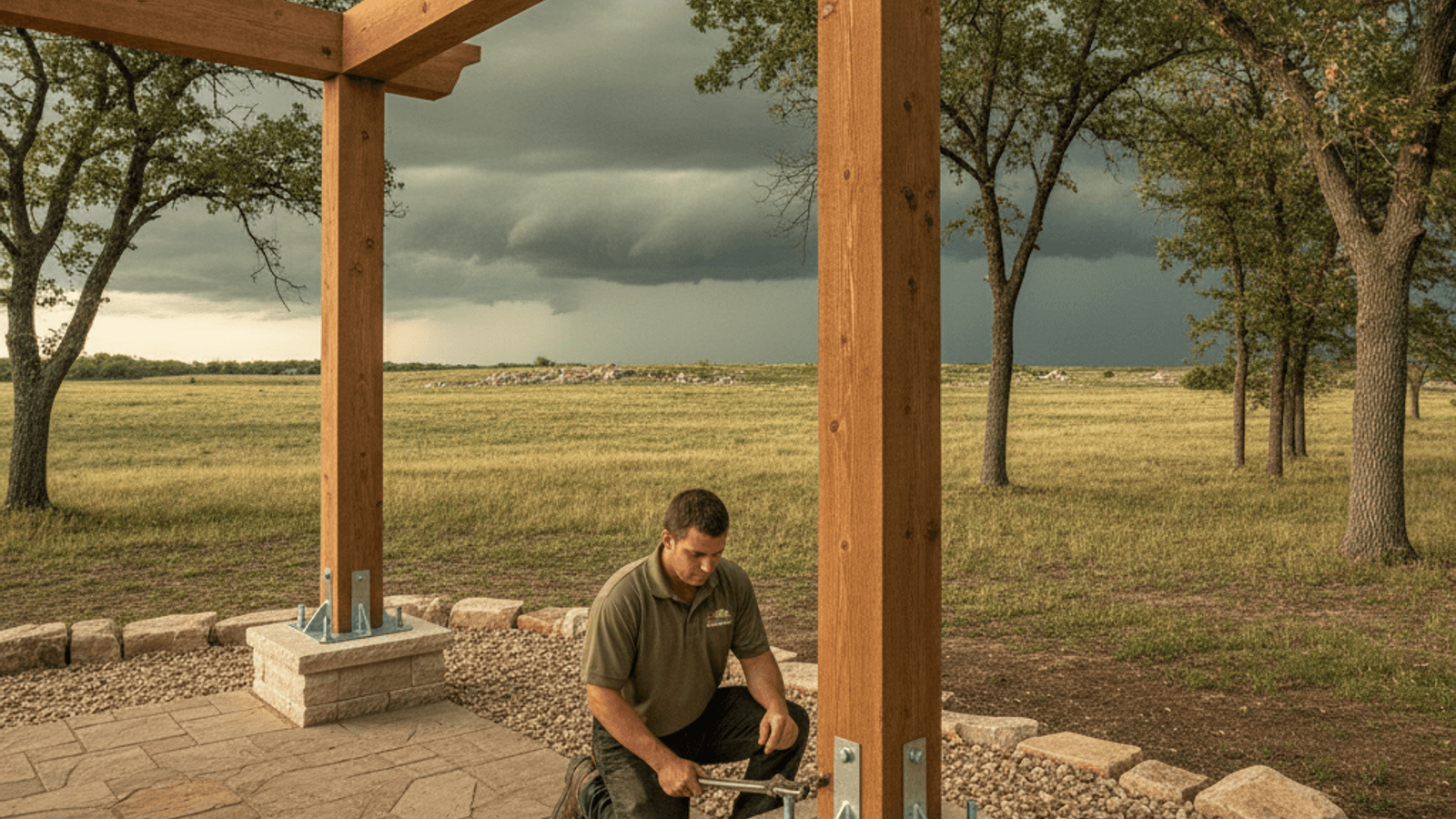
Topeka sits squarely in the classic northeast-Kansas severe weather corridor, and the March-through-June stretch is when that reality shows up most in outdoor living. Straight-line wind damage and large hail are routine here in spring and early summer, not rare events, which means the structures in your yard need to be built and maintained with that in mind, not treated as an afterthought.
Structural anchoring matters more than roof style
A pergola or gazebo that’s genuinely anchored, meaning posts set into footings below the frost line and connected with rated post-to-footing hardware, holds up to straight-line wind in a way a structure with posts just set into a shallow concrete collar does not. If you’re not sure how your existing structure was built, it’s worth having it checked before storm season rather than after a bad wind event answers the question for you.
What to check before the season starts
A few practical things are worth walking through each spring. Check that structural hardware, if visible, isn’t showing rust or corrosion that would weaken the connection. Look at any roof or shade element for loose panels or fabric that could catch wind like a sail. Confirm nothing has settled or shifted since last season, which could indicate a footing issue that predates the coming storm season rather than being caused by it.
Fire features and storm debris
A fire pit or outdoor fireplace itself is generally low-risk in a wind event, but check the area around it for anything that could become storm debris, overhanging branches, loose furniture, or umbrellas that aren’t secured. Storm debris landing in or near a fire feature is a secondary risk worth eliminating before the season gets going.
Furniture and loose items
Anything not structurally anchored, patio furniture, umbrellas, planters, decorative items, should have a plan for securing or moving indoors when a severe weather warning is issued. This isn’t specific to permanent structures, but it’s part of the same seasonal mindset: know what’s vulnerable in your yard before the first warning of the season, not during it.
After a severe weather event
If a storm does move through, a quick visual check of any structure’s posts, footings, and connections is worth doing before assuming everything is fine just because it’s still standing. A structure that took a hard hit and stayed up can still have hardware that’s loosened or a footing that’s shifted slightly, which matters for how it holds up the next time.
Building for Tornado Alley from the start, rather than retrofitting after a bad season, is the more reliable approach, and it’s a standard part of how any outdoor structure should be planned here in the first place.