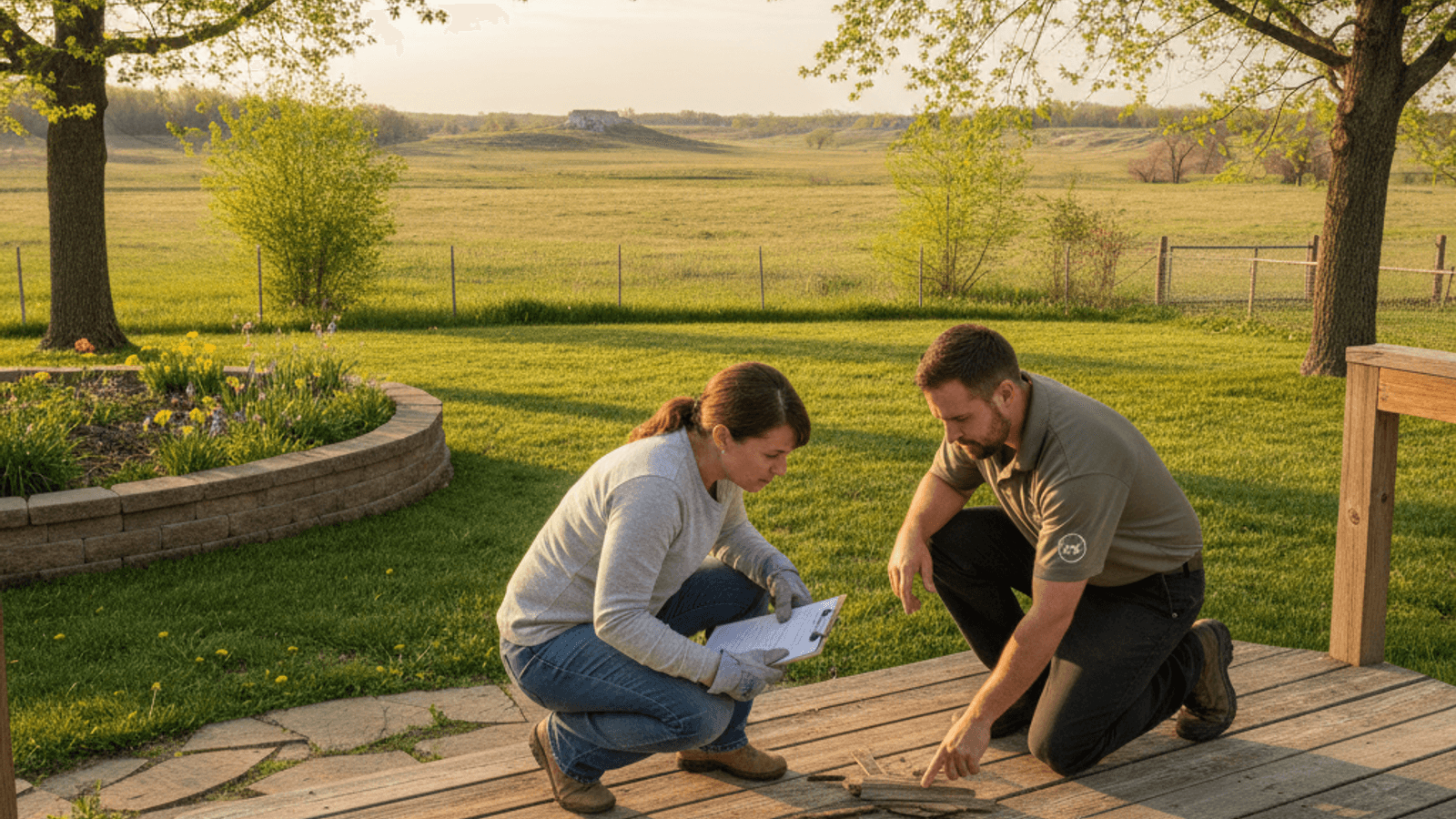
Every spring, a Kansas winter leaves its mark on outdoor structures, and a short walkthrough before the outdoor season really gets going catches small issues before they become bigger, more expensive ones. Here’s a practical checklist to work through once the ice storms are behind you.
Deck inspection
Walk the full deck surface and check for boards that feel soft, spongy, or have visible splintering, all signs of moisture damage that’s worse after a winter of freeze-thaw cycling. Check the ledger board where the deck meets the house for any separation or gap that wasn’t there last fall. Test railings and stairs for looseness. If the finish looks gray, faded, or is peeling, that’s your signal it’s time for deck repair and staining before the wood underneath starts taking real damage from UV and moisture exposure without that protective layer.
Paver patio check
Walk the paver patio surface looking for pavers that have shifted, sunk, or developed noticeably wider joints than last season, all common after a winter of freeze-thaw movement. Minor unevenness can often be releveled without a full rebuild; more significant shifting across a larger area is worth having assessed before it gets worse through another freeze-thaw cycle.
Concrete surfaces
Check for new cracks or a slab that’s heaved unevenly relative to an adjoining surface. Small hairline cracks are common and not usually urgent, but a crack that’s widened noticeably or created a trip hazard is worth addressing.
Landscape lighting
If you have low-voltage landscape lighting, check that the transformer is functioning correctly and hasn’t taken on moisture over the winter. Fixtures that were working fine in fall sometimes need a bulb replacement or a connection check after months of exposure. This is also a good time to confirm the transformer’s location is still draining properly and not sitting in standing water.
Fire features and structures
Give any fire pit or fireplace a visual check for cracking from freeze-thaw exposure before using it again for the season. Pergolas, gazebos, and other structures with posts are worth a quick check for any new leaning or looseness at the base, which could indicate footing movement worth having looked at.
When to call it in
A lot of what shows up on this checklist is manageable with a straightforward repair. But if you’re seeing widespread shifting, structural movement, or damage that goes beyond surface-level wear, that’s worth a professional assessment before the next freeze-thaw cycle makes it worse. Catching a problem in spring is almost always cheaper and easier to fix than catching it after another full winter.