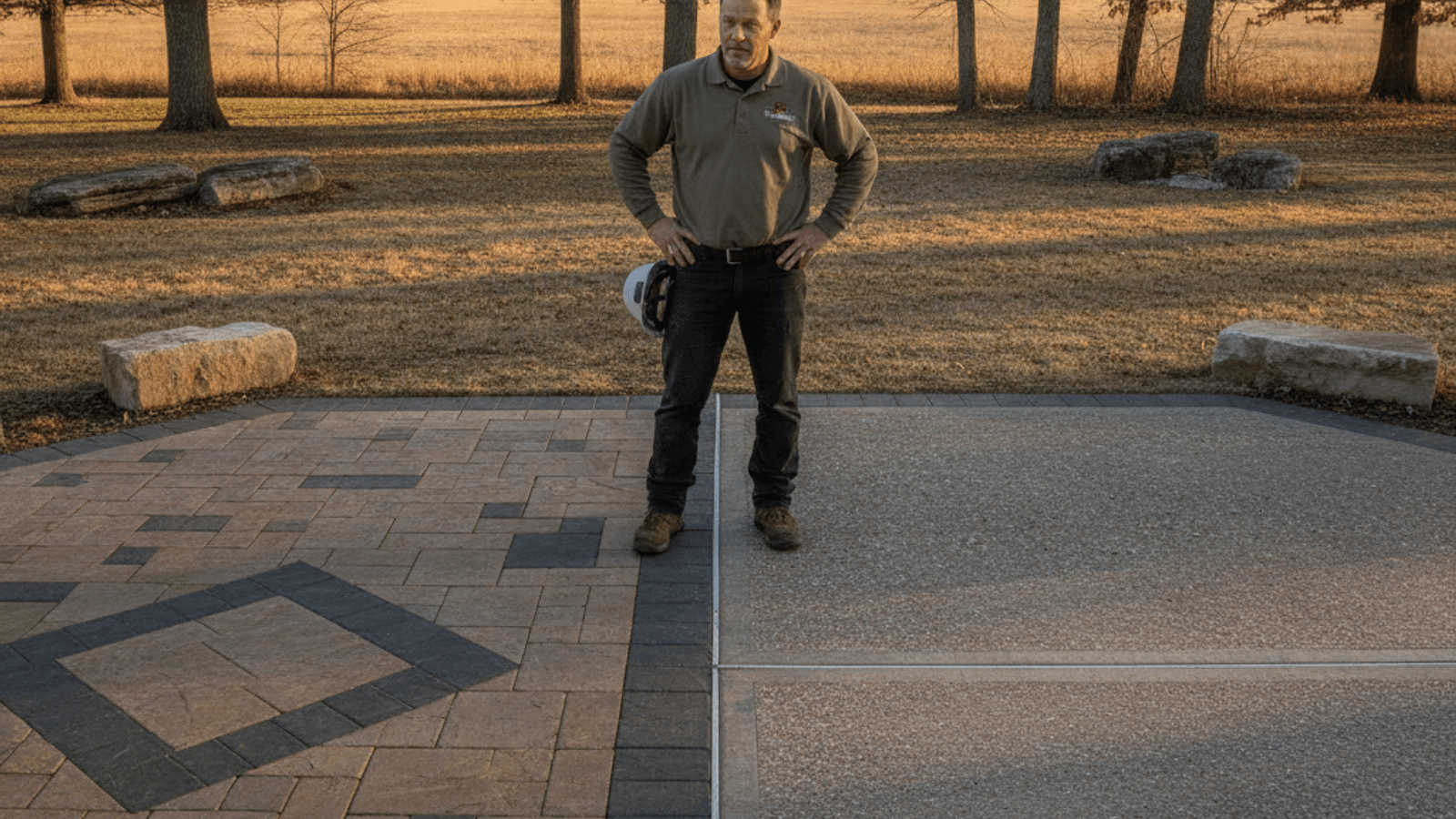
Patio material comes up early in almost every outdoor living conversation, and the honest answer is that both pavers and concrete can work well in Greater Topeka, as long as the base underneath either one is built for freeze-thaw. The real differences show up in upfront cost, how each material ages, and what happens when something eventually needs fixing.
Upfront cost
Concrete patios generally cost less per square foot than paver patios, and they install faster since it’s a single pour rather than laying individual units. For a straightforward rectangular patio, concrete is usually the lower-cost option out of the gate.
Pavers cost more, partly for the material itself and partly for the labor of setting, leveling, and jointing each piece. That upfront premium buys some things concrete doesn’t offer, which is where the comparison gets more interesting than a simple price-per-square-foot number.
How each one handles freeze-thaw
This is where Kansas conditions matter more than they would in a milder climate. Concrete is a single continuous slab, which means when the ground beneath it shifts from freeze-thaw cycling, the whole slab has to absorb that movement. If it can’t, it cracks. Reinforcement and properly placed control joints reduce this risk but don’t eliminate it entirely.
Pavers are individual units set in sand or a similar bedding material, which gives the whole system some flexibility. When the ground shifts slightly, the pavers can move a small amount independently without the same catastrophic cracking a rigid slab experiences. That flexibility is a real advantage in a freeze-thaw climate, though it only holds up if the base beneath the pavers was compacted correctly in the first place.
Repair down the road
This is often the deciding factor for homeowners once they understand it. If a section of concrete cracks or heaves, repairing it usually means breaking out and repouring that section, which rarely blends invisibly with the surrounding slab. If a paver shifts or an individual unit cracks, it can typically be pulled and replaced without disturbing the rest of the patio, and the repair is far less visible.
Which one actually makes sense for your project
Budget-driven projects, especially larger square footage where the per-unit cost difference adds up fast, often lean concrete. Projects where long-term repairability and a more finished look matter more than the lowest possible upfront number often lean pavers. Neither is the wrong answer as long as the base is built correctly.
What matters more than the material choice is whether the contractor is treating the base the same way regardless of which surface goes on top: a properly compacted base, adequate depth, and drainage that moves water away from the structure rather than letting it pool and refreeze under the surface.