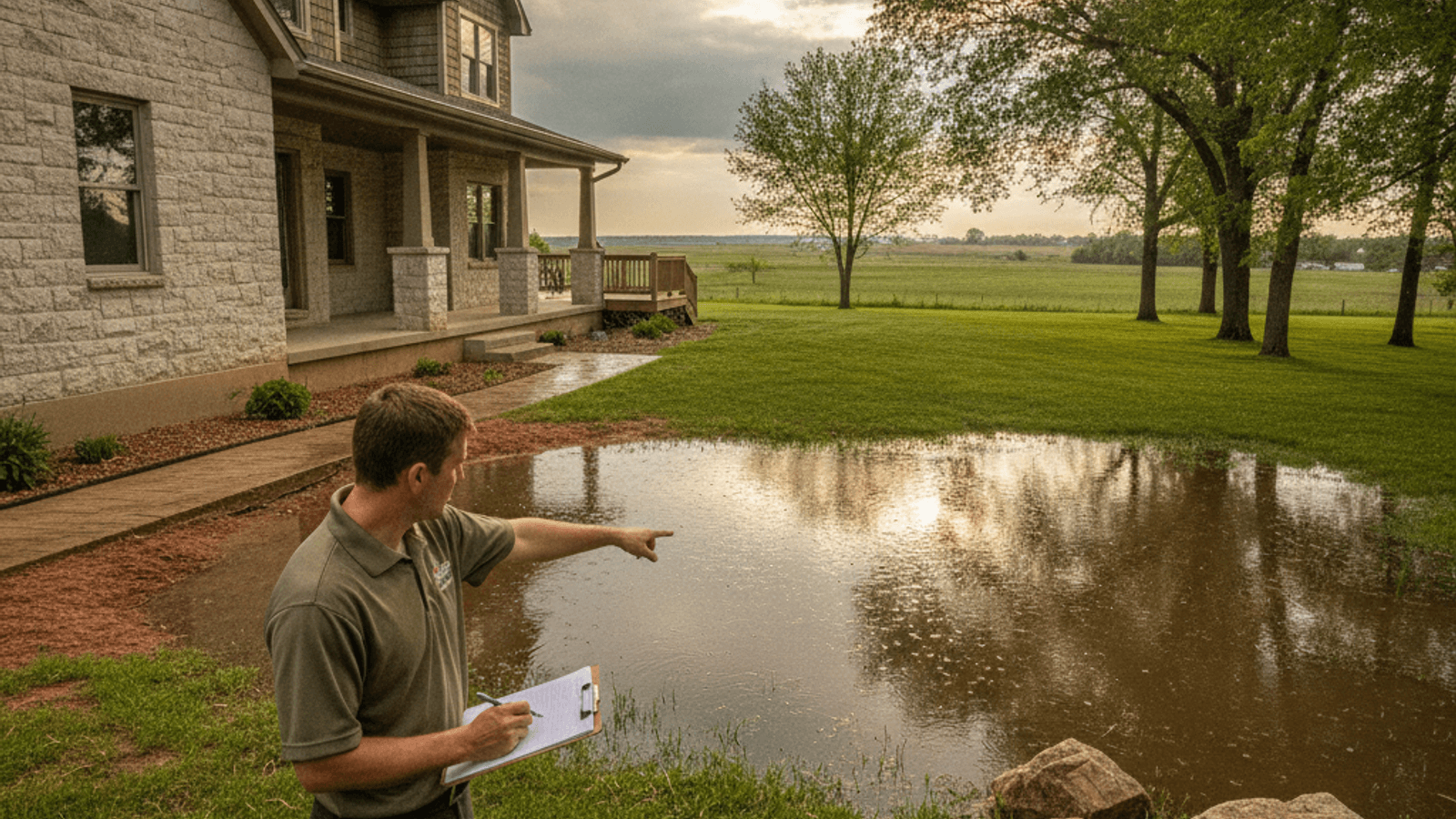
Heavy spring thunderstorms are routine in Greater Topeka, and a yard that handles normal rain fine can still show real drainage problems after a genuinely hard storm. Figuring out which of a few likely causes you’re dealing with is the first step to an actual fix instead of just watching it happen again next storm season.
Clay soil is working against you by default
Northeast Kansas’s expansive clay soil drains slowly by nature, which means even a well-graded yard here takes longer to shed water than the same yard would in sandier soil. That’s not a defect, it’s the baseline you’re working with, and drainage and grading work has to account for it rather than assume water will simply soak in on its own timeline.
Grading failures
If water is consistently pooling in the same spot, especially near the foundation, that usually points to a grading problem: the slope around your home isn’t moving water away fast enough, or in the worst case, is actually sloped toward the house instead of away from it. This can be original construction grading that was never quite right, or grading that’s shifted over years as soil settled.
Downspout discharge
A surprising number of drainage complaints trace back to something simple: a downspout dumping water right next to the foundation instead of carrying it further away. This is one of the easier fixes, extending the downspout discharge point, but it’s often overlooked because the downspout itself looks like it’s doing its job even when the water it’s releasing isn’t going anywhere useful.
Flash runoff after severe storms
Heavy spring thunderstorms can drop a significant amount of rain in a short window, more than a yard’s normal drainage capacity is built to handle instantly. Some standing water immediately after a hard storm is normal. The concern is water that’s still sitting there a day or more later, which points to one of the underlying causes above rather than just storm intensity.
What about Perry Lake flood-control flooding
Properties near Perry Lake experience a different kind of flood risk tied to the reservoir’s flood-control function rather than general yard drainage. That’s a separate conversation from typical yard runoff and depends heavily on specific proximity and elevation relative to the reservoir.
When it’s time for more than a quick fix
If you’ve extended downspouts and confirmed the immediate grading around the house is correct and you’re still seeing standing water, the fix likely needs to go further: a French drain to intercept and redirect water from a specific low spot, or in some cases a retaining wall paired with drainage work to manage a genuine grade change on the property. Both are more involved than a downspout extension, but they address the actual water movement problem rather than one symptom of it.