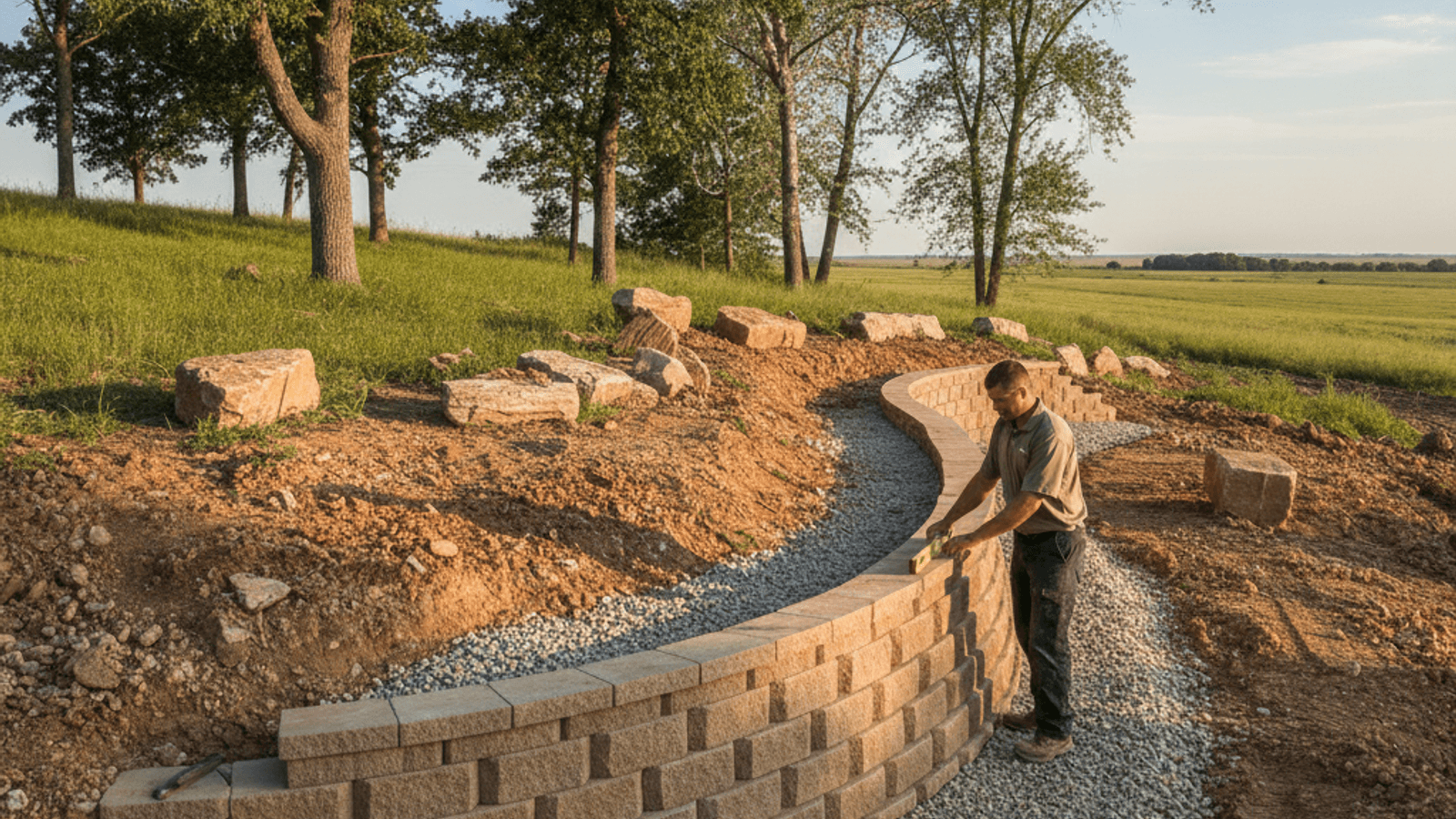
Retaining wall pricing varies more than most outdoor living projects, and the reason isn’t just wall height or material choice. In Greater Topeka, the expansive clay soil underneath the wall is a major cost driver that a lot of national pricing guides don’t account for, because they’re not written for this soil type.
The general price range
Retaining walls here typically run $25 to $60 per square face foot, depending on wall height, material, and site conditions. A small garden-bed wall a couple feet tall lands at the low end of that range. A taller wall managing a real grade change, especially one that needs engineering and a permit, lands higher.
Why clay soil pushes the number up
Expansive clay soil swells when wet and shrinks when dry, and that movement puts real lateral pressure against a retaining wall, more than a wall built in sandier or more stable soil would experience. To handle that pressure, a properly built wall here needs drainage gravel and a drainage pipe behind the wall face to relieve hydrostatic pressure, which is added cost and labor a wall in a different soil type might not require to the same degree.
Skipping that drainage work is how a retaining wall ends up bulging, leaning, or failing within a few years instead of lasting decades. It’s not an optional upgrade in this soil, it’s closer to a baseline requirement for the wall to actually do its job.
Footing depth adds cost too
Taller or structural walls need footings set below the frost line, same logic as a deck or pergola post, which adds excavation and material cost compared to a wall that could get away with a shallower footing in a milder or less clay-heavy region.
Permits and engineering
Taller walls typically need engineering review and a permit through the City of Topeka’s Development Services office, which is another line item that a lower quote might be skipping, intentionally or not. A wall built without required engineering isn’t just a compliance risk, it’s a real structural risk given how much pressure this soil puts against it.
What drives the biggest swings in a quote
Wall height is the single biggest factor, since pressure against a wall increases significantly as height increases, not just linearly. Material choice (segmental block versus natural stone versus poured concrete) matters too, along with site access, since a wall that requires equipment to reach a backyard costs more to build than one accessible from the street.
If you’re comparing quotes and one comes in noticeably lower than the others, it’s worth asking specifically about drainage design and footing depth before assuming it’s simply a better deal. In this soil, that gap in the quote is often a gap in what’s actually being built underground, and drainage and grading work done alongside the wall is often where a lower bid is quietly cutting corners.